Showing posts with label democracy. Show all posts

Friday, March 25, 2022

History At Its Finest: A Review of Black Reconstruction by W.E.B. Du Bois

W.E.B. Du Bois: Black Reconstruction
My rating: 5 of 5 stars

While the history of the American Civil War is quite well known by most Americans thanks to some amazing books and documentaries, the decade-long period immediately following it known as Reconstruction is little known and little understood by most. In fact, thanks to ahistorical mythologies like the “Lost Cause” narrative, Reconstruction has been painted as a dark period when corruption was rampant and Southern state governments, run by Freedmen and Northern carpetbaggers, ran roughshod over people’s rights. The historical record shows that this couldn’t be further from the truth, yet this insidious myth persists. Fortunately, there are also plenty of books that have been written to push back against this narrative and establish the true history of Reconstruction. While many such books have been written in recent years, nearly all of them owe an enormous debt of gratitude to this book, one of the very first systematic histories of the period to tell the story truly. What makes this a must-read for anyone interested in Reconstruction is how W.E.B. Du Bois centers Black Americans in this tale. In this book, Mr. Du Bois makes the strongest case for what has been said by others before: that Black Americans, the enslaved as well as the free, were their own greatest liberators and Reconstruction’s greatest reformers.

While W.E.B Du Bois is best known today as the author of such works as The Soul of Black Folk and one of the founders of the NAACP, he was also the first Black men in America to receive a doctorate from Harvard.  Published in 1935, this book is the culmination of some of Du Bois’s scholarly work, which he had been hitting upon at different times in his scholarly and popular articles decades before.  Starting with an examination of the condition of both enslaved Black people and their White enslavers in the Antebellum South, Du Bois takes his reader on a journey through the 20 year period that encompassed both the Civil War and Reconstruction.  At each step, he shows through critical analysis of the sources available to him at the time how Black Americans’ own actions were what drove many of the key changes of this period.  For example, with so many enslaved Black Americans escaping to Union lines and many of them as well as freedmen from the North eager to join the Union Army, their actions put pressure on Pres. Lincoln and the Union to transform their Civil War objectives from solely from preserving the Union to also pursing abolition.  Du Bois also shows how Black lawmakers during Reconstruction were the prime agents in the creation of the South’s public school system for both white and black kids after the war, a reform that would stay in place long after White Southerns had forcefully and violently suppressed political power.

Du Bois also addresses some of the criticism of this period, particularly the corruption that Black lawmakers were accused of partaking.  While not deny that there were cases of bribery and corruption, Du Bois helps to put it in the context of the time, which was an incredibly corrupt period in American history in general, and shows how oftentimes the corrupt actions of white lawmakers was far greater than anything Black lawmakers did.  Not only that, but Du Bois constantly reminds readers that Reconstruction was an extraordinarily violent time with many atrocities committed against Black Americans.  Racial terror and the undermining of America’s first attempt at multiracial democracy was the goal of groups like the Ku Klux Klan and other white supremacist groups.  Du Bois makes the argument that the Civil War never really stopped after Appomattox Courthouse, but morphed into a racial war of white supremacists targeting Black Americans.  Indeed, thinking of the racial violence through that lens and using Du Bois’s analysis, Du Bois may not have had the words for it in 1935, but readers who are even casually versed in the history of modern warfare can recognize the resemblance of the Klan’s violent tactics as similar to the Vietcong during the Vietnam War or the Taliban during the war in Afghanistan.  Sadly, as Du Bois shows, the North quickly grew weary of sustaining a military presence in the South and abandoned the project after 1876, a pattern America would follow in Vietnam and Afghanistan using similar arguments (“They got to learn to stand on their own feet eventually”) and having similarly tragic results.  Du Bois analyzes the reasons for the North’s withdrawal in 1876 and shows how it opened the door not just to the end of Reconstruction and Black Americans’s political power for decades, but also how it opens the door to the segregated America that follows soon afterwards.

One weakness of this book though lies in Du Bois’s Marxist background.  By the 1930s, Du Bois was firmly moving in a Marxist direction and he uses Marxist language and thought in his analysis throughout this book.  While this class approach to analyzing the period provides intriguing insights, I do feel as though Du Bois could stretch his Marxist analysis at times.  For example, while an alliance between Black labor and poor White labor in the South could have transformed the history of the period, I have doubts that large numbers of Americans could even conceive of society in such class conscious ways at the time.  Yes, Karl Marx was alive and organizing in Europe at the time and had written The Communist Manifesto in 1848, but his magnum opus, Das Kapital, was published in 1867 and I doubt his ideas had spread quickly enough in America at the time to have any effect.  I could be wrong, but to me Du Bois too often applied a class analysis that Black and White Americans would not have recognized during this period.

Overall, though this book is nearly 90 years old now, Du Bois’s strong analysis and exceptional historical writing provides a gold standard by which all other histories of Reconstruction should be judged.  Library of America has once again done an enormous service to American literary history by publishing this seminal work once again.  I highly recommend this book to anyone interested in American history in general and Reconstruction in particular.

Saturday, March 12, 2022

The Whole Truth: A Review of The 1619 Project edited by Nikole Hannah-Jones

The 1619 Project: A New Origin Story
My rating: 5 of 5 stars

One of my favorite scenes in my favorite Indiana Jones movie, The Last Crusade, is the moment when Henry Jones, Sr., played by the legendary screen actor Sean Connery, is being slapped around by the Nazi colonel demanding to know where Jones’s Holy Grail Diary is. But when the colonel asks, “What does the diary tell you that it doesn’t tell us?”, Jones grabs the colonel’s hand before he can slap him again and says, “It tells me that goose-stepping morons life yourself should try reading books instead of burning them!” I bring that scene up in the context of this book review because, as of this writing, scores of “parent groups” across the United States are trying to force public schools and libraries to remove books about BIPOC and/or LGBTQ+ topics from their shelves. This particular book has been at the center of many of these efforts ever since the first articles of this project were published in The New York Times Magazine in August 2019. Having just finished this book, I have to say that it is one of the best books about American history that I have read in a long time. The authors and editors of this book make the best case for why Black Americans’s 400+ year freedom struggle should be at the center of how we tell the story of America, and, to paraphrase Henry Jones, Sr., people must read this book instead of trying to ban it.

Building upon The New York Times Magazine articles that were first published, this book tells America’s history from the perspective of Black Americans with articles and works of poetry and fiction written by Black authors.  Starting with the first enslaved Africans being brought to the Jamestown colony in 1619, the authors document several different aspects of American life that have been affected by our country’s history of slavery and racial oppression.  In some ways, the concept and overall framework is very similar to another book that came out just a few months earlier than this, Four Hundred Souls edited by Ibram X. Kendi and Keisha N. Blain.  The key difference is that authors in this book are given an ample amount of space to discuss a particular topic, like medicine, music, or democracy, from the very beginning through the present, whereas in Four Hundred Souls authors a kept to a 5 page limit looking at a specific topic within a 5 year period in American history.  Because of that, the authors in The 1619 Project have the space to fully flesh out their topic and demonstrate how America’s past echoes strongly in our present.  Thus, the approach that this book provides a clearer picture and more impactful thesis in each chapter.

Each chapter of the book is divided into different topics with works of poetry and fiction separating each topic and providing a rough timeline of American history.  In anthology works such as these, I oftentimes find that the quality from work to work can vary wildly.  That is not so in this book.  Each chapter is top notch with excellent writing and research that both proves each author’s point and is incredibly engaging to read.  At no point did I feel bored or unconvinced.  The works of poetry and fiction that separate the chapters may appear superfluous at first glance, but in reality serve a vital function of marking out keep moments in American history, providing an artistic break between each chapter’s often thought-provoking topics, and inserting a creative outlet for what the authors and readers are feeling after each chapter.  

In short, this book is a monumental achievement in popular history writing that the editors and authors should be proud of.  I have nothing but absolute praise for this work and if there is one book on American history that you read this year, you owe it to yourself to read this one.

Monday, August 30, 2021

An Empress to be Remembered: A Review of Empress Dowager Cixi by Jung Chang

Empress Dowager Cixi: The Concubine Who Launched Modern China
My rating: 5 of 5 stars

The economic and political rise of China since the late 1970s has been one of the key historic trends of the last several decades. What is interesting though about China’s rise is that this is not the first time China has recovered from disastrous economic and political management to become a powerhouse in international affairs. In the middle of the 19th century, China had been humiliated in a war with foreign powers, but new leadership arose to lead China out of the middle ages and into the modern era. This wonderful biography is about the most important figure responsible for China’s first move towards modernity, the Empress Dowager Cixi, and why she should be considered in the same league as other great women world leaders like Elizabeth I of England or Catherine the Great of Russia.

Cixi was one of Emperor Xianfeng’s numerous concubines, but she possessed a keen intellect and an open-mindedness that far outpaced anyone leading China at the time.  When she gives birth to the Emperor’s only legitimate male heirs, she is thrust from back of the Emperor’s harem into the forefront of the court’s favored women.  When the First Opium War and the subsequent death of the Emperor soon afterwards leads to her young child becoming the next emperor, Cixi seizes her chance to launch a palace coup, removing from power the arch conservatives who had so disastrously run the empire, and begins a near five decade rule over China that sees the modernization of the country’s economy, military, and politics.  Though there were stumbles along the way, by the time of Cixi’s untimely death in 1908, China is on the verge of becoming a constitutional monarchy with limited civil liberties and voting rights for the average Chinese citizen.  Sadly, she did not live long enough to fully implement these political reforms and that failure would lead to the political turmoil that would engulf China for the next several decades.

The Empress Dowager could not have found a better modern biographer to tell her story.  Ms. Chang has used scores of archives from China, Japan, and elsewhere to not only tell Cixi’s story, but to also dispel some of the myths that have developed since her death that has portrayed her as an arch conservative who stood in the way of China’s progress.  Ms. Chang argues that not only is this narrative false, but that Cixi was the main reason why China advanced into modernity during her rule.  Ms. Chang also offers a very sympathetic picture of the Empress Dowager.  Cixi is portrayed as being open-minded and eager for discussion and consensus amongst her advisors (up to a point) and, though she could be opposed to adopting some reforms, she could be persuaded to change her mind.  At the time of Cixi’s death, some western admirers were comparing her to other great female leaders, and Ms. Chang does not seem to dispute that.  

Ms. Chang does not airbrush Cixi’s faults though.  She does give an extensive account of Cixi’s role in the Boxer Rebellion, which led to a catastrophic war with foreign powers.  There, Ms. Chang notes how stubborn Cixi could be and how disastrous her decisions ended up being, though it did help to bolster her image amongst the people and paved the way for even greater reforms in the last years of her life.

It is a shame that more people, particularly in the West, do not know about the Empress Dowager Cixi, but this book does is a perfect biography to help raise her historical profile and introduce her to a Western audience.  It is detailed, well-researched, and does a lot to dispel certain myths about her rule.  If you are looking for a great biography about great female world leaders, I highly recommend this one to you.

Monday, July 26, 2021

Trumpism Around the World: A Review of Twilight of Democracy by Anne Applebaum

Twilight of Democracy: The Seductive Lure of Authoritarianism
My rating: 4 of 5 stars

Since former Pres. Trump’s election to the presidency in 2016, there have been a ton of books written regarding our current political moment. While many have of these books have been directed straight at former Pres. Trump, many others address Trumpism more tangentially, trying to explain the political and cultural forces that have made his rise possible. While these are valuable books about American politics, they fail to take into account that the rise of the extreme right is a global issue. In this book, not only does Mr. Applebaum provide an invaluable look at this global phenomenon, she also offers a different way to look at how these political forces are aided and abetted, and she offers a personal story of loss friendships that sound very familiar to many readers today.

As a historian of the Soviet era who is married to a Polish politician, Ms. Applebaum is well placed to comment on the rise of the extreme right in Europe and America.  She specifically devotes time to the nations of the U.S., the U.K., Spain, Poland, and Hungary in her analysis and even American readers who are only familiar with the rise of Trumpism will get chills at how familiar much of the rhetoric is in these countries.  Indeed, you could take the essence of former Pres. Trump’s “America First” message and adapt it to any one of these countries and the politicians trying to lead these extreme political movements.  Thus, Ms. Applebaum makes a very strong case that the rise of extreme right political movements is cause for global concern.

One of the more valuable aspects of this book is that she doesn’t focus all of her energy on the leaders of these movements, like Donald Trump of Victor Orban.  Instead, much of her attention is focused on middling politicians and intellectuals who aid and abet their rise whom she calls clercs.  She sets up this argument in an explicit contrast to Hannah Arendt’s own analysis on totalitarianism in such classic works as The Banality of Evil.  In this book, Ms. Applebaum argues that these clercs are not just “following orders” like German citizens were under Nazism.  Instead, whether out of jealousy, thwarted ambition, sheer opportunism, or all of these things, these clercs provide the intellectual and political framework for the rise of extreme right politicians.  It’s an intriguing look at our current political moment as well as a great critique of a famous political theory.

What makes Ms. Applebaum’s analysis of present day clercs intriguing though is that she is not examining them not just as an academic from afar.  As a self-proclaimed center-right Reaganite, Ms. Applebaum has known and met many of these clercs.  Some of them were her very good friends.  Thus, she is not just speaking as an academic, she is speaking from personal experience seeing many of her friends succumb to the allure of extreme right politics.  Her shock at seeing so many of her friends, who were staunch anti-communists and prominent politicians who took part in the fall of communism in Eastern Europe, fall for propaganda, misinformation, and lies, or even propagate them, is evident.  So too is her personal pain at losing these friends.  This is both the book’s greatest strength and its greatest weakness.  While her personal experience with many of these clercs aids this book, her pain is also palpable and at times she can’t stop herself from criticizing her former friends and the people they surround themselves with rather harshly.  Granted, much of that criticism may be warranted, but this book does lurch from time to time into a screed of personal betrayal. 

In conclusion, while there are plenty of Trump books or Trump-adjacent books out there, this is one of the few of those books that offers a truly global perspective.  She may indulge in some rather harsh criticism, but Ms. Applebaum speaks as both an academic with unimpeachable credentials as well as from personal experience.  If you’re still interested in reading Trump or Trump-adjacent books, I would highly recommend this book to you.

Tuesday, June 8, 2021

Where Do We Go Now?: A Review of Ten Lessons for a Post-Pandemic World by Fareed Zakaria

Ten Lessons for a Post-Pandemic World
My rating: 5 of 5 stars

No event in recent history has been as disruptive to the world as the COVID-19 pandemic that, as of this writing, is still ongoing. Millions have died and millions more have been infected by this disease. In the United States, the number of deaths from COVID are comparable to the number of combat deaths during the Civil War. And the recession caused by the pandemic and subsequent lockdowns is on a par with the 2008 financial crises that we had only just recovered from. Much has been laid bare by this once in a century catastrophe, but fortunately Mr. Zakaria has written a fabulously book to guide us through this pandemic and look forward beyond our current crisis to see what the world may look like afterwards.

Best known for his book The Post-American World and his Sunday international news show on CNN, Mr. Zakaria is the right man to take a global perspective on this pandemic.  But, rather than disprove the central theses of globalization and relative American decline, Mr. Zakaria argues in this book that the pandemic proves both the necessity of globalization and America’s continued to decline.  He even goes beyond that to reveal how important quality government is to daily living, the need for two-way dialogue between experts and average citizens, and the overwhelming necessity for global cooperation.  All of these “lessons” are very well backed up by statistics and figures from an incredibly wide variety of authoritative sources.  And yet, despite all the overwhelming citations, Mr. Zakaria’s writing style is both engaging and easy-to-follow.  Both experts and laymen should be able to pick up this book and learn something.

The only drawback of this book is how outdated some of the information is.  Published in October 2020, some events have accelerated since then.  The COVID vaccine was still in development, though close to completion, when this book went to press and, of course, the 2020 U.S. presidential election and Jan. 6 attack on the U.S. Capitol had not  happened yet either.  Though this book in hindsight is quite prescient, I do hope Mr. Zakaria does update this book when it comes out in paperback.

Overall, though only slightly out of date, this is one of the best books to examine these current times and try to project into the future.  Though the pandemic has scarred nearly all of us, this book can help us make sense of this current crisis and what is necessary to build back better in the future.  I highly recommend this book to both policy wonks and laymen alike.

Wednesday, April 7, 2021

Timeless Advice, Dated Text: A Review of Choosing Civility by P.M. Forni

Choosing Civility: The Twenty-Five Rules of Considerate Conduct
My rating: 4 of 5 stars

For the first two decades of the 21st century, American culture has been characterized by a coarsening of our civil society. Politics and politicians have become more ideologically polarized and prone to see opponents as enemies to be totally destroyed rather than as the loyal opposition. Adding fuel to the fire has been social media, which through anonymity and filter bubbles has led to less tolerance and patience with those who disagree with us. To our credit, Americans have recognized this declining civility and this book offers some timeless advice, even though its text is a little dated.

Dr. Forni co-founded the Johns Hopkins Civility Project in 1997 and promoted civility as both an academic and public lecturer until his death in 2018.  This book is one of the early products of that work.  Broken into three parts, Dr. Forni examines the societal and philosophical necessities for civility in daily life in the first and third parts, but also expands the definition beyond just speaking respectfully to others.  To Dr. Forni, civility also includes our actions towards others, towards animals and the natural world, and how we treat ourselves.  The bulk of the book’s value comes in the second part where Dr. Forni lays out his 25 rules for civility.  Each rule is accompanied with a couple of short pages on why the rule is important and some real-world examples of its use (or lack of use).  With such advice as “Accept and Give Praise”, “Respect Other People’s Time” and “Don’t Shift Responsibility and Blame”, it is hard to find fault with any of his advice.  This book has already helped me to reflect on some of my prior actions and resolve to do better in the future, which is what all advice books such as this should aim to do. 

That said, this is a book that was first published in 2002, so some of the text is a little dated.  For example, Dr. Forni calls cell phones “portable phones”, talks about using your own credit card to pay for long distance calls, and since social media platforms such as Facebook didn’t yet exist, he only makes a passing mention of civility on “internet message boards.”  As much of our current concerns about incivility in society center around behavior on the internet, it is a shame that such a good book is too old to directly address the topic.  And though much of Dr. Forni’s advice could be applied to this sphere, it would be nice if someone would come along and update this text.

Incivility is a national issue, as evidenced in its most extreme form in the Capitol Insurrection on Jan. 6, 2021.  The solution to this will not come from government, but rather from society and individuals working together to show mutual respect to our neighbors and their views.  While the text of this book is in need of updating, its advice is absolutely timeless.  It’s easy to read size and format also means that this is a relatively quick read, though I would concur with Dr. Forni’s advice that you try to read this book at a slow pace and mull over everything that has been written.  Overall, I highly recommend this book to everyone looking to improve civility and respect in our society.

View all my reviews

Monday, April 5, 2021

Crying Out for Freedom from the Other Side of American History: A Review of An African American and Latinx History of the United States by Paul Ortiz

An African American and Latinx History of the United States
My rating: 4 of 5 stars

America has a long history of promoting democracy and human rights, but also denying those basic rights to African-Americans and Latinx people. While there are a lot of histories that look at the history of both African-Americans and Latinx people as oppressed groups, nearly all of them treat each group separately. While there is great value in doing so, it does leave out the ways in which both groups supported each other’s fight for freedom and democratic rights and also implicitly perpetuates the false narrative that these two groups’ struggles are distinct from each other. In this incredible examination of American history from the point of view of both groups, Dr. Ortiz links both of their struggles for freedom and shows how America has too often been on the wrong side of history and freedom not just in America, but in its dealings with the Americas too.

As part of Beacon Press’s ReVisioning America series, which also has published such great books as An Indigenous People’s History of the United States and A Queer History of the United States for Young Readers, the goal of this book is to reexamine American history through a different lens.  Too often American history has been filtered through a predominately White POV that emphasizes our country’s many high points while only giving a superficial examination of America’s racist and oppressive past.  Dr. Ortiz tosses that White narrative out the window and focuses instead on the perspective of African-Americans and Latinx people.  The result is not the flattering picture most Americans already know.  African-Americans were enslaved for a good chunk of American history and faced exploitation, legalized segregation, and mass violence after the Civil War.  Latinx people in America, though never enslaved, also were exploited, segregated, and murdered by White Americans too, along with being deported unjustly when labor conditions were poor.  Thus, American history through this perspective is dark, oppressive, and never in keeping with the high ideals we claim to have founded this country on.  

The greatest value of this book though is not in treating African-Americans and Latinx groups as separate, but linking these two groups’ history and showing how each group at their best have supported each other’s struggles for freedom and basic human rights both at home and abroad.  Dr. Ortiz does a fantastic job of cataloging how African-Americans paid attention to and supported the revolutions in the Americas, drawing inspiration from them for their own early freedom struggles.  He also shows how Latinx people abroad supported African-American’s struggles for freedom in Antebellum America.  And once this book moves beyond the Mexican-American War and the Civil War, Dr. Ortiz catalogs the important contributions both groups made to the advancement of civil rights and labor rights in the 20th and 21st centuries.  It is fair to say that without both groups working both separately and together, American history would be tragically different.

Though Dr. Ortiz’s book is great, it is not perfect.  In the first few chapters, the narrative balance between both groups is tilted more towards coverage of African-Americans.  Granted, these chapters deal with pre-Civil War America, so the plight of African-Americans should take center stage at this point.  Also, once we get past the Civil War, Latinx people become a larger part of the narrative and the oppressive system of racial capitalism begins to grind both groups.  Thus, the narrative begins to balance out and Dr. Ortiz’s book starts firing on all cylinders.  Still, I wish he could’ve maintained a better narrative balance from the very beginning.

Too often the voices of African-Americans and Latinx people have been silenced or disbelieved.  The great value of a book like this is that it offers a counter-narrative to the simplistically naive story Americans are used to and acts as a clarion call for America to live up to its highest ideals of liberty and equality for all, as both African-Americans and Latinx people have been demanding from the very beginning.  Americans of all races, colors, and creeds should read this book along with other books in this series, repent, and resolve to justly apply our founding principles to all people in our country and abroad.

View all my reviews

Thursday, April 1, 2021

Writing History: A Review of Author in Chief by Craig Fehrman

Author in Chief: The Untold Story of Our Presidents and the Books They WroteAuthor in Chief: The Untold Story of Our Presidents and the Books They Wrote by Craig Fehrman
My rating: 5 of 5 stars

It has become a self-perpetuating tradition of Washington politics for politicians seeking office or leaving office to write a book about themselves, their experiences, and their values. A lot of this has been garbage and some has been good, but very few have been exceptional. This is perhaps most visible in that most perennial and expected of political books, the presidential campaign book or autobiography. But no book is ever written in a complete vacuum and the presidential book is no exception. In this wonderful book, Mr. Fehrman not only gives us the inside details of how and why president wrote their books, it also shows how presidents were affected by the literature they read and how they in turn affected American literature with their books. Thus, it is not just a history of presidential books, it is a great thumbnail sketch of American literature and publishing.

Starting with Thomas Jefferson’s Notes from the State of Virginia, Mr. Fehrman takes us through the development of other presidents’ books, from John Adams’ unpublished legacy book to Lincoln’s collection of debate speeches, to Calvin Coolidge’s incredibly personal autobiography.  He even extends his survey to the modern era and ending with Barack Obama’s Dreams From My Father, though Donald Trump does get a brief mention.  It is incredible to see the different approaches each president took to writing their books.  It’s also interesting to see how as both the presidency and American publishing grew, so too did a president’s need for assistance in writing their books.  By the modern era, few presidents were writing their books themselves, if at all, and ghostwriting has become almost a necessity.  There are some exceptions such as Reagan’s Where’s the Rest of Me? And Obama’s Dreams, but most presidential books are no longer written solely by presidents.  It is a fascinating look at how presidential writing and books have dramatically changed since the founding.

What is also great about this book is how Mr. Fehrman paints a picture for us by also explaining the state of American literature and publishing throughout our history.  American literature and publishing did not exist at the time Jefferson and Adams were writing their books and Americans who could read were dependent on cheap knockoffs from Britain.  Having more than a family Bible in a house was expensive and difficult to come by for many Americans in the early years of the nation too.  Thus, not only did the state of literature and publishing affect how our presidents wrote and published, but also how presidents’ books affected American literature and publishing.  For example, Jefferson’s Notes had to be published in France first, but it also helped put America on the political and literary map.  It also had both positive and negative effects on Jefferson’s future political ambitions as both sides used quotes from the book to either support or oppose Jefferson’s candidacy in 1796 and 1800.  And, of course, Grant’s Memoirs not only set the gold standard for presidential memoirs, but also set the stage for the blockbuster books of future presidents.

Not only does Mr. Fehrman offer a great and even intimate history of presidential books, he also offers some literary criticism of those books as well.  This is perhaps the weakest part of the book, especially as he gets closer to the present.  As political books becomes more ubiquitous, it seems as though Mr. Fehrman gets more and more critical.  By the epilogue, Mr. Fehrman is calling most of the political books out there garbage and offering advice for how presidents could write better books that appeal to both history and to average readers.  Now, to be fair to Mr. Fehrman, not every politician’s book is great and some are even downright terrible (do I really have to read Josh Bolton’s terribly titled The Room Where It Happened to know that it is not a great book?), but I couldn’t help but wonder who is at fault for this.  Are politicians at fault, or is it the complicated demands of the job we are asking them to do today, or could it just be American literature has become so mass produced and mass marketed that publishing houses will print anything and average readers will pick up anything and neither will are able to separate the wheat from the chaff?  Mr. Fehrman seems to think that it is politicians’ faults, but I think the real answer is a bit more complicated than that.

Despite Mr. Fehrman’s criticisms of modern political books, it does not take away from the overall joy of this work.  Every page is engaging and fascinating, offering a little something for everyone.  I highly recommend this to anyone interested in presidential history or the history of American literature and publishing.

View all my reviews

Thursday, March 4, 2021

Plodding through Communism's Fall: A Review of Secondhand Time by Svetlana Alexievich

Secondhand Time: The Last of the Soviets
My rating: 3 of 5 stars

The fall of the Soviet Union is a watershed moment in the history of the 20th century and is often viewed by the West as a triumphant moment. But what about the people of the Soviet Union who lived through it? Svetlana Alexievich attempts to gives voice to the ordinary Russians and people living under the Soviets in this book and, many times, offers compelling oral testimony about what the end of communism looked like on the inside, but too often is unbearably slow and lacking in any meaningful context to help a Western reader orient themselves.

If you are living in the West, especially in the United States, before you pick up this book you should keep in mind that you are definitely not the intended audience.  This was written in Russian for Russian-speaking people.  Throughout the book there are references to Soviet political and cultural icons many of whom are incredibly obscure to a Western audience.  They are so obscure in fact that this book is littered with footnotes from the editor explaining who this person was.  Normally, footnotes are not a problem, but there are so many here that it may make it difficult for a Western reader to fully immerse themselves in this world.

Another thing to keep in mind about this book is that it is an oral history and one that is quite unlike any other oral history you may have read before.  In most oral histories, the author will interject some narrative and context behind the person who is speaking, maybe even a little biography of the person and their background.  Ms. Alexievich forgoes all of that in favor of letting the speaker completely speak for themselves.  She never mentions what questions she asked to get such responses from her subjects and only rarely jumps in with with some italicized narrative throughout the book.  Reading this book is the equivalent of reading a series of longwinded interviews with the interviewer almost entirely scrubbed out of the story.  

This refusal to inject herself into the book’s narrative can be both a blessing and a curse.  With some of her most interesting subjects, such as those who were either in the Kremlin or were apart of some of the critical moments, such as the August 1991 putsch in Moscow or the demonstrations against President Lukashenko in Belarus.  These were some of the best and most dramatic parts of this book.  However, a lot of this book does not center around these key historical events.  Thus, many of the interviews have this searching quality to it with people asking what did it all mean?  What did Soviets fight for in the Second World War if communism would just end?  Is the capitalist system that replaced it any better?  For a Russian-speaking reader, there may be some identification with these pondering, but for a Western reader with little love for the Soviet Union, not so much.  Thus again, Western readers may have trouble sympathizing with some of the subjects in this book.  

Then there are the purely ordinary Soviets just trying to live their lives in a new world.  Again some of these stories are interesting, but others are so melodramatic as to be almost a parody of life in Russia.  There are copious stories about alcohol abuse and domestic violence throughout this book and particularly in the second half.  Indeed, almost no marriage in this book doesn’t include alcoholism or domestic abuse or both.  The first few tales are interesting, but the ninth or tenth time it is told become repetitive and maudlin.  None of this is helped by the glacial space of this book.  Many of the chapters are unbearably slow, tedious reading.  This is not a book you should pick up for a quick breezy read as you should expect to sink a lot of time into reading it.

Ultimately, this book is a very mixed bag.  Some stories are incredibly fascinating and dramatic, especially the ones that link up with key historical moments.  But many other are incredibly slow, plodding stories with very little narrative meat for people to orient or attach themselves to.  If you are someone who is already familiar with this period in Russian history or already have your head soaked in the tales of ordinary modern life in Russia and the former Soviet states, you might find this book rather interesting.  However, if you’ve never learned about the fall of the Soviet Union and want to do so, read something else like The Future is History by Masha Gessen first before picking this book up.  

View all my reviews

Monday, February 15, 2021

The American Sphinx Speaks: A Review of Thomas Jefferson's Writings from the Library of America

Writings: Autobiography / Notes on the State of Virginia / Public and Private Papers / Addresses / Letters
My rating: 3 of 5 stars

Thomas Jefferson, author of the Declaration of Independence, third President of the United States, and founder of the University of Virginia, is one of the more elusive Founding Father’s to pin down. Like Benjamin Franklin, he was a polymath with a deep interest in the many scientific undertakings of his age and was a consummate, though reluctant (at least according to himself), politician. At times he could be seemingly all over the place. What this book of Jefferson’s public papers and letters does is let readers peer more deeply into his mind and soul than the many biographies written of him since his death, but at the cost of creating one extremely long volume.

This book is divided into several parts including: an autobiography he wrote for his children and grandchildren; his “Summary View of the Rights of British America”, which was a prototype of the Declaration of Independence; his famous “Notes on the State of Virginia”; his public papers, letters, addresses and replies; and finally the private letters he wrote throughout his life.  By examining all of these together, one can really get the sense of Jefferson was as a person and where he stood on the key issues of the day.  Though some historians have painted Jefferson as a bit of a political opportunist and an enigma, by allowing Jefferson’s writings to speak for themselves one can see that he was a man of principle and resolve with a keen interest in advancing the sciences.  Not everything Jefferson wrote down or said will jive well with a modern audience, particularly his views on African-Americans and African colonization.  Still, for better or worse, much of America’s identity as a democratic nation comes from Jefferson’s writings and politics.

Though this volume does a great job of letting Jefferson speak for himself, it is WAY too long.  At 1600 pages, this is one of the longest books in the Library of America’s collection and is equal in size to a standard copy of the Bible.  Though I had planned on finishing this in a month, it took me over six weeks to read this book from cover to cover.  There is an opportunity though for Library of America to rectify this by splitting Jefferson’s writings into two volumes, as they have done with other presidents such as John Adams, John Quincy Adams, and Theodore Roosevelt.  About half of the book is made up of Jefferson’s autobiography and public addresses and papers.  The other half are Jefferson’s private letters.  Library of America could split this into two volumes between his public and private papers and may even make more room for more of Jefferson’s private letters, which were some of the most interesting and accessible reads.  As it stands right now though, this volume is better used as a reference for lay readers rather than something to be read from cover to cover.

Like other Founding Fathers, Thomas Jefferson left behind a legacy of liberty, but also of contradictions.  As America continues to strive to live up to its founding ideals of life, liberty, and the pursuit of happiness, looking back on how the founding generation both succeeded and failed at the same endeavor will be immensely educational and hopeful.  Though some may struggle to make it through this volume, there is real value in reading and understanding the thoughts and actions of Thomas Jefferson and the other Founding Fathers.  I recommend this book to people interested in learning about Jefferson first hand and are willing to devote time and effort to do so.

Friday, February 5, 2021

February 2021 24in48 Readathon Live Blog


A Photo of Jefferson and my tea taken from my Instagram.
February 6, 2021, 1:08 a.m.
I didn't intend to truly start this readathon until the morning, but because it officially started at 12:01 a.m. EST (9:01 a.m. PST), and because I got to my reading late earlier today, I unintentionally kicked my readathon off at the same time as everyone else.  I started off by reading the first two chapters of Giovanni's Room by James Baldwin out of my Library of America edition of his early novels (see below for some links) and then read 100 pages of Jefferson while enjoying some nice Sleepytime Extra tea.  It took a little longer for me to finish all this reading than I expected, though not as long as I feared.  If I keep this pace up, I do believe I can finish Jefferson, Giovanni's Room, and The Light of the Jedi this weekend.  But will I be able to finish Felix Ever After or Children of Virtue an Vengeance (let alone start it) this weekend?  Doubt is creeping into my head.  Hopefully I can, but I am going to get some rest now and truly dive into this in the morning.


February 5, 2021: The Day Before!
It's been a few months since I have done an honest to goodness readathon and if I am ever hopeful of whittling down my TBR, then readathons are my only hope.  Fortunately, the wonder folks at the 24in48 Readathon have been working hard at organizing a great readathon and I am so happy to be joining them.

What is a readathon you ask?  A readathon is where you try read for as long as you can in a certain time frame without stopping, sort of like running a marathon (read + marathon= readathon).  One online place that is famous for organizing this is Dewey's 24 Hour Readathon.  They famously choose 24 hour period to just read non-stop during that period (their next one is on April 24).  There is also a bunch of social media done on Facebook, Instagram, Twitterm, etc. that folks can participate in as they are reading.  

The 24in48 readathon is similar in that you try to read for 24 hours straight, but they break it up over two days.  That means you can tackle your 24 hours of reading in any combination you like.  Read all day Saturday or all day Sunday?  Go for it!  12 hours on Saturday and 12 hours on Sunday?  Absolutely!  8 on Saturday, 16 on Sunday?  That works too!  Any combination of 24 hours of reading you can think of works for this particular readathon.

One thing they are doing differently this year is that they have chosen two group reads for folks to participate in, one fiction and one non-fiction.  Their non-fiction read is Felix Ever After by Kacen Callender, a YA Romance starring a trans male as the protagonist.  The non-fiction read is White Negroes by Lauren Michele Jackson about cultural appropriation.  I personally plan on reading Felix Ever After myself, but no one is obligated to read these books if they want to read something else.

On top of Felix Ever After, I have a few books I either want to finish or make progress on.  First, I want to finish reading the Library of America collection Thomas Jefferson's writings that I have been working on since January 1.  This has been an interesting read, but at 1600 pages it is huge!  I had planned on finishing by the end of January, but life interceded.  I also plan on making progress on Library of America's collection of James Baldwin's early novels.  I just finished re-reading Go Tell It On the Mountain last night and I hope to have Giovanni's Room finished by the end of this readathon.

Next, I am going to finish reading Star Wars: The High Republic: The Light of the Jedi by Charles Soule.  My reading obsession originated with my love of Star Wars novels (the pre-Disney original Expanded Universe novels that is) back in high school and college, but I haven't really read many Star Wars novels since then.  However, this High Republic series sounds incredibly exciting.  I've been enjoying this book very much and I plan on finishing it this weekend.

Lastly, I plan on at least starting Children of Virtue and Vengeance by Tomi Adeyemi.  This is the second book in her Legacy of Orïsha series, the first one being Children of Blood and Bone.  I read that when it first came out and I loved it!  I'm looking forward to diving back into this amazing YA fantasy world.

Of course, this is just the plan.  I have no idea if I will be able to actually do any of this.  Fortunately, like pervious readathons, I plan on live blogging this one.  Just come back to this page throughout the day tomorrow, February 6, and Sunday, February 7.  I'll be regularly adding updates to this page about my progress.  And while you're at it, be sure to check out any one of these great books or authors I have mentioned.  And if you want to join the 24in48 Readathon, head over to their website and fill out their online form.  Happy reading everyone!

Monday, February 1, 2021

Reckoning with a (Racist) Past: A Review of Stony the Road by Henry Louis Gates, Jr.

Stony the Road: Reconstruction, White Supremacy, and the Rise of Jim Crow
My rating: 4 of 5 stars

As America continues to grapple with its checkered past in the wake of recent and ongoing Black Lives Matter protests, one period that is seeing a resurgence of interest is the Reconstruction period. Between the end of the Civl War and the Compromise of 1876, America made its first tentative forays into multiracial democracy and equality. Eric Foner’s book Reconstruction: America's Unfinished Revolution 1863-1877 is a critically praised history of that period worth a look. But what Dr. Gates contributes in this book is a cultural history of Reconstruction and the immediate period afterwards known as Redemption. While the racist imagery in this book can be hard to look at at times, Dr. Gates does a great job of showing the violent and propagandistic origins of many of today’s racial issues, but also how important Black artistic movements, particularly the Harlem Renaissance, were to resisting these racist narratives.

The first thing you need to know about this book is that it is not a straight narrative history.  There are not a lot of dates or explanations of key historical events during the Reconstruction and Redemption periods.  Thus the narrative can often go back and forth through time.  One minute Dr. Gates may be talking about something that happened in 1886, then move forward to something in 1903, then back to 1877.  What the reader needs to keep in mind though is that this book is structured thematically, with the first three chapters showing the origin and perpetuation of violent and racist myths about this period in this period, myths that still plague America to this day.  Each chapter also comes with a section of photographs and images from the period, much of which is incredibly difficult to look at.  It includes some of the most racist images I’ve ever seen in a book and it even includes some gruesome photographs of lynched Black Americans.  Anyone who is triggered by violent or racist imagery, be warned.

The best part about this book is how it is all tied up neatly at the end.  The last chapter is about Black Americans’ response to the white supremacy that robbed them of their rights and lives.  As Black Americans struggled to define themselves as a people after the collapse of Reconstruction and the violent rise of white supremacy, it led to incredible instances of artistic expression.  If the Redemption period from 1876 to the early 20th century is the counter-revolution that overturned Black Americans’ gains during Reconstruction and established white supremacy across much of the South, then Dr. Gates makes a great argument for considering the Harlem Renaissance as a cultural counter counter-revolution that sought to overturn the racist imagery and mythology of the Redemption period.  Through the great works of artists and scholars such as W.E.B. Du Bois, Langston Hughes, Zora Neale Hurston, Alain Locke, and others, the racist stereotypes of Black Americans perpetuated by white supremacists became much more difficult to uphold, thus paving the way culturally for the Civil Rights Movement of the mid 20th century.

While this may not be the narrative history of Reconstruction I thought it would be, Dr. Gates nevertheless offers a valuable contribution to our understanding of this vital period of American history.  Though the racist and violent imagery may be difficult to see, I would highly recommend this book to anyone interested in learning more about this period in American history that now feels more relevant than ever.

Saturday, January 16, 2021

A Necessary Book: A Review of How to Be an Antiracist by Ibram X. Kendi

How to Be an AntiracistHow to Be an Antiracist by Ibram X. Kendi
My rating: 5 of 5 stars

As the Trump era comes to a close and race relations, among many other things in this country, have reached a new low, especially after the summer of Black Lives Matter protests last year, people of goodwill have been looking for ways to break the country and themselves free from America’s white supremacist past and present. One of the newest paradigms shifts in thinking about achieving racial equality in America is antiracism, yet few know what exactly this means. In this wonderful book, Dr. Kendi not only illuminates the deeper meanings and workings of antiracism, but also charts his own personal development into antiracist work.

Like the book So You Want to Talk About Race by Ijeoma Oluo, Dr. Kendi talks about racism and antiracism both from experience and from deep academic research.  His previous work, Stamped from the Beginning, would be an excellent book to read before this one, along with Ms. Oluo’s.  However, what distinguishes this book from other recent works of antiracism is both the deeper insight’s and definitions Dr. Kendi explores, but this is a book anchored in his own humanity, humility, and self-reflection.  Almost every chapter has some personal anecdote that leads into his antiracist point and many of them are critical of his own faults and failings earlier in his life.  Thus, by reflecting on his own past failings, Dr. Kendi invites his readers to explore their own past failings where they have failed to treat others, particularly BIPOC and LGBTQ+ people, with equal dignity and respect.  As Dr. Kendi explored his own development towards antiracism, I even found myself reflecting on my own failings and resolving to do better in the future.

It can be too easy for people to point out racist ideas, acts, or policies, but it is much more difficult to point to our own racist thoughts and actions and work to improve ourselves.  Dr. Kendi’s excellent, well-though out and deeply reflective work, can help all of us to do so.  There is a reason why this book has been on a lot of antiracism reading lists and I have no criticisms to give this book.  For anyone who has read So You Want To Talk About Race, Stamped from the Beginning, or other antiracism works, you must read this book next.

View all my reviews

Saturday, October 24, 2020

October 2020 Readathon Live Blog

October 25, 11:25 a.m.
I finished my final book, Divine Self-Investment by Tripp Fuller at around 4 a.m., one hour before the end of the readathon.  But I was so exhausted from pushing myself to finish this book that I immediately went to bed without an update.  So, I didn't make it the full 24 hours, especially if you include the hours when I was traveling or in my virtual reunion meetings, but I cam pretty close.  Also, I ultimately feel like I will have to reread Divine Self-Investment at some point in the future as I feel my reading of it was affected by my exhaustion.  This was a complicated book and I am not sure how Mr. Fuller got to the conclusions that he did, so a more careful reading is called for.  But, that is the end of this readathon.  I look forward to the next one.  And next time, I will make sure that I am not interrupted and have the ENTIRE day to read.


8:47 p.m.
After another reunion event catching up with old friends from grad school and getting a small dinner, I finally completed the poetry book I was on, There Should be Flowers by Joshua Jennifer Espinoza.  I wasn't sure whether or not I was going to like this book, but it turned out to be great.  I highly recommend it to poetry lovers, particularly and trans readers out there.  Now, on to Divine Self-Investment by Tripp Fuller.

5:06 p.m.
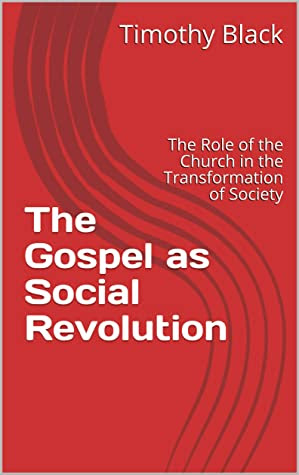
I finally finished a book that I have been stuck on for over a month now, The Gospel as Social Revolution by Timothy Black.  It's an incredibly detailed look at why evangelical Christians should consider poverty alleviation to be central to our Gospel mission and not on the periphery.  He also examines a program in South Africa to show how evangelicals could implement such a program based on the needs of the local community.  Now that I have gotten books that I had already started reading out of the way, it's time to start some new books!
2:42 p.m.
So my break took way longer than I expected it to, but now I am back and ready to get into my next book, The Gospel as Social Revolution by Timothy Black.

10:26 a.m.
I'm on a bit of a break right now as I am taking part in my grad school's online reunion right now.  Then I have to travel a little bit with my wife, but I'll get back to reading on the car ride.  See you soon.!

8:23 a.m.
I just finished reading my first book for the day, The Diary of Young Girl by Anne Frank.  Strangely, this my first time ever reading this book as I somehow managed to make it through public school without encountering this book in any class that I took.  I know I read some book about the Holocaust, I just don't remember what it was.  A pity it wasn't this one.

5:58 am
It's been a while since I have done a live blog of a readathon and what better time than to start with Dewey's 24 Hour Readathon in October. I just got finished with some devotional reading and now I am moving on to The Diary of a Young Girl by Anne Frank, which I have less than 100 pages to complete.    For the sake of my sanity, I will only be updating this blog when complete something or take a break of some sort.  Let the reading adventure begin!

Thursday, August 6, 2020

America's Prophet: A Review of Fredrick Douglass by David Blight


Frederick Douglass: Prophet of FreedomFrederick Douglass: Prophet of Freedom by David W. Blight
My rating: 5 of 5 stars

The 19th century in American history is filled with amazing historical figures, but few stand out as much as Fredrick Douglass. In this wonderful biography, Mr. Blight dives to deep into the life of the preeminent American of the 19th century and, by doing so, holds up a mirror to an America once again having to reckon with its dark racial past.

The life of Fredrick Douglass is one that many Americans already know as he wrote three different and highly praised autobiographies at various times in his life. Born into slavery, Douglass taught himself how to read, escaped from slavery, and became one of the greatest abolitionists of the period. He would go on to use his voice and his pen to denounce slavery in the South and racism in the North, recruit black soldiers for the Union effort during the Civil War, and hold the country accountable to the promises it made to former slaves during Reconstruction and long afterwards. Mr. Blight deftly navigates Douglass' career and gives a nuanced picture of the fiery American prophet. At the same time, Mr. Blight also reveals the home life that sustained and frustrated him, particularly in the latter half of his life. All the while, he doesn't look away from Douglass' faults, particularly his prejudicial language towards Native Americans and Catholics, or the compromises he would make later in life as a loyal-to-a-fault member of the Republican party. Thus, this biography gives one of the fullest pictures you are likely to find of Douglass anywhere.

The best part of this biography is how not a word is wasted even in such a large biography. At times Mr. Blight can get a wee bit preachy, but it is always in the context of Douglass' life and it never really feels out of place. Thus, this biography is not just a life of Douglass the man, but a call to America, past and present, to heed Old Man Eloquent's words and live up to its promises of liberty and justice for all as laid down in the Declaration of Independence, the Constitution, and especially the Reconstruction amendments.

Whether this is you are new to the life of Fredrick Douglass or not, this is a necessary biography for our times on one of the most important figures in American history. I highly recommend this book to all interested in American history or in the lives of great Americans.

View all my reviews

Monday, April 20, 2020

World Come Falling Down: A Review of State Tectonics

My rating: 4 of 5 stars
In her previous books in this series, Infomocracy and Null States, Malka Ann Older has created a futuristic government known as micro-democracy and a powerful data platform in charge of running it all known as Information. What is interesting is that she has always been questioning the very system that she has created. In this concluding novel to her Centenal Cycle series, micro-democracy reaches a crisis point that it may not survive.

There are many things to love in this book. Ms. Older has honed her ability to write a taut thriller where the pages leading up to the climax were hard to put down. She also continues a trend from her previous book where she brought peripheral characters in the past to the forefront. Unlike the previous book though, she doesn't leave previous main characters behind. The previous characters, such as Roz, Mishima, and Ken, all have an important role to play. It does get a little confusing at the climax, but it shouldn't be too hard to follow along.

There are still a few problems with this book. Though it has gotten much easier after three novels, I am still not a big fan of Ms. Older's use of the present tense. Also, while I thought it was very good of Ms. Older to question the world government, but in her books micro-democracy has only existed for 25 years before reaching its next crisis. I don't wish to spoil anything about this book, but it feels like not a lot of time has passed for this system before things start to go bad. I know it's a small point, but she could've given her system more time before shaking things up. Then it would feel like there were real stakes involved with the story overall.

Ms. Older has improved on a lot that held her back previously and she seems to be getting better. I look forward to seeing her writing prowess grow even further in future novels.


Tuesday, April 14, 2020

Moral Clarity in Disturbing Times: A Review of Reclaiming Jesus

My rating: 5 of 5 stars
The election of Donald Trump in 2016, the White Supremacist march in Charlottesville, VA, in 2017, the separation of immigrant families at the U.S. southern border, and many other events have been a terrible wake up call to the moral decay that has infected the highest levels of our government. Though popular imaginations of Christianity in America have Christians being some of the strongest supporters of Pres. Trump, what the media too often fails to notice is the large numbers of faithful Christians throughout the country who are just as appalled by recent events as other Americans are, but perhaps more so as it seems to cut to the very heart of everything the gospel of Jesus Christ is suppose to oppose. Jim Wallis is one such prominent Christian thinker and activist who has been calling on Christians in America not, as he puts it, to go left or right, but to go deeper into faith. In this incredibly timely book, Rev. Wallis examines the core questions at the heart of the Gospel message and applies the answers to our current political time.

Inspired by the Reclaiming Jesus Movement that was kicked off in 2018, Rev. Wallis takes a deep dive into the Gospel and our current political environment (I highly recommend you visit the website as well as watch their video statement for more information). In a time where lies, corruption, and authoritarian actions at the highest levels of our government seem to define our daily headlines, Rev. Wallis gives the morally clearest statement of how Christians should respond to the times from anyone inside our outside the faith I have ever read. And the fact that this book is centered on the strong moral principles taught in the Bible, as exemplified in Matthew 5 & 25, of loving your neighbor as yourself is deeply stirring. As I wrapped up reading this book over the course of the Lenten season (and using a Lenten study guide to do so), I have been deeply stirred to "be transformed by the renewing of my mind" (Romans 12:2). The lessons I have learned from this book as well as the many other resources Sojourners has provided will be sitting with me for a long time.

This book will not appeal to everyone, unfortunately. For those who are already "ride or die" for Pres. Trump will be turned off by Rev. Wallis's unrelenting criticism of him and his administrations. There were one or two places where I thought that even Rev. Wallis was starting to lose sight of his topic, but his long criticisms always have the point of contrasting what is happening in our country and government to what the Gospel calls Christians to be and how to act at all times. I also fear that the closeness of some Christian denominations to right and far right politics will turn off others from reading a book on social justice in our present times with Jesus at its center. On top of that, depending on how the 2020 presidential election shakes out what the future of America holds post-Trump, this book and its social critiques may have a limited shelf life.

That said, this is a deeply moving call to action and social justice to Christians in America and around the world. Whether you are Christian or not, American or not, pro-Trump or not, I wish everyone would read this book and "go deeper" into the Gospels. The country is in need of strong moral clarity and Rev. Wallis provides it in this book.


Friday, February 7, 2020

Pig’s Rule: A Review of Animal Farm by George Orwell

Animal Farm Animal Farm by George Orwell
My rating: 5 of 5 stars

As the current political times we live in have gotten darker and darker, like many people I keep finding myself coming back to classic dystopian novels to gain insights and even inspiration. There are plenty of classics to choose from, such as Brave New World and The Handmaid's Tale, but I recall being truly frightened by George Orwell's vision of totalitarianism in 1984. So, I am a little ashamed that it has taken me so long to get to this wonderful novel about revolution and the slow slide back into tyranny that can result.

Taking place on a farm in the English countryside, operated by the cruel and incompetent drunk Mr. Jones, Orwell relates a simple tale of farm animals fed up with their oppression who, though talking about it for some time, join together to overthrow their oppressor in an unplanned moment of anger. Finding themselves free human oppression for the first time, the farm animals write down a list of rules to govern themselves and work hard to make their farm prosperous for all. But, as dissension forms between the two pigs who act as leaders, and as one of those pigs moves swiftly to make himself the sole ruler and beneficiary of the farm's wealth, the animals find themselves in a tyranny just as oppressive as the one they overthrew.

While this basic plot is pretty common in the annals of revolutionary history (for those interested in the history of revolutions, you should definitely check out the Revolutions Podcast), what makes this book an instant classic is how Orwell relates the tale so simply. Despite the book being about farm animals, the allegorical nature of this book makes it accessible to just about everyone. Heck, you could even read this book to children as it is told in such a simple and accessible form that anyone can instantly understand what Orwell was trying to do.

Reading this book also reminded me of why dystopian novels are so important in dark political times. Throughout the book the dictatorial pigs keep repeatedly telling lies or tacking on lies to the truth in order to fool the farm animals and keep themselves in power. As I was reading this book, I couldn't help but compare what the pigs were doing to what some current politicians are doing today. This also marks Animal Farm as a classic. It doesn't matter when you read it, the truths Orwell conveys about how the high ideals of a revolution can be subverted by the lies of the greedy are just as true today as they were in 1946.

Just as 1984 was such an enjoyable, if frightening, read, so too is this book. For those who have been wanting to jump into dystopian political novels, I would highly recommend this to you as your first book.

View all my reviews

Thursday, February 6, 2020

Bully for America! A Review of The Bully Pulpit by Doris Kearns Goodwin

The Bully Pulpit: Theodore Roosevelt, William Howard Taft, and the Golden Age of Journalism

My rating: 4 of 5 stars

One of the most persistent and pressing problems in recent U.S. history has been the ever widening gap between the rich and poor, the growing power of large corporations at the expense of workers, and the government's inability (or unwillingness) to address the problem seriously. Populist candidates on both the political right and left have gained a great deal of traction by criticizing our current state of affairs. As we face another election where the fate of Progressive politics for the next generation will be on the line, it is good to turn back the clock to a period in U.S. history and see how extraordinary leaders in politics and the press arose to meet a similar challenge. Fortunately, historian Doris Kearns Goodwin does all that in this excellent examination of the lives of Theodore Roosevelt, William Howard Taft, and the muckraking journalists of McClure's that did so much to bolster the Progressive cause of the early 20th century.

Ms. Goodwin starts with the lives of Theodore Roosevelt and William Howard Taft, two men of drastically different temperaments, and how their strong friendship supported each other for much of their careers. As a longtime fan of Theodore Roosevelt, Doris Kearns Goodwin travels some rather well-trodden ground for me. With the exception of Theodore Roosevelt's second wife and longtime friend, Edith Carrow, Ms. Goodwin does not reveal much about TR that you couldn't have already found in other biographies. But when she turns to examining Taft's life, that is where this book really starts to pick up. Sadly, history has not been kind to Taft. Too often he has been overshadowed by his famous presidential predecessor, TR. But Ms. Goodwin does a tremendous job of revealing the true Taft to readers who may not be as familiar with him. The contrasting images of TR and Taft reveal that while TR was more combative, passionate, and stubborn, Taft was far more fair-minded, affable, and efficient even when he procrastinated. Indeed, Taft shines as the far more likable of the two presidents in this book. Ms. Goodwin's charting of their relationship's rise and fall is at the very heart of this book and that eventual fall is just as heartbreaking as you would expect.

While the two presidents make up the bulk of this book, another key element is the Progressive "muckraking" journalists that gathered around S.S. McClure's magazine, McClure's. The famous journalists Ida Tarbell, Lincoln Steffens, William Allen White, and Ray Stannard Baker all played a critical role in exposing the corruption of the different business trusts and political machines that had been choking the civic life out of the nation at that time. Indeed, Ms. Goodwin makes an effective case that, without McClure's and the top-notch investigative journalism it pioneered, TR would not have been nearly as successful as he became. Indeed, she strongly hints that, without McClure's, TR would not have had enough popular support to win the Republican nomination and then the presidency in his own right in 1904.

With these three moving parts, it would be a difficult juggling act for anyone. And, unfortunately, it appears at times to be too much for Ms. Goodwin too. Several times it felt as though these three storylines were disconnected from each other. This is especially true just before the beginning of McClure's golden age in the mid-1900s to the end of that time when S.S. McClure's manic mood swings and extra marital affairs would destroy the partnerships that made McClure and his journalists so successful. On top of that, the heart of this book is TR and Taft's friendship, but Ms. Goodwin rarely gives us any insight into how their relationship became so close despite the fact that these were two men of such vastly different talents and temperaments, though not entirely of politics (which might be a surprise to some). Not until the end does Ms. Goodwin really give us an image of TR and Taft as friends rather than really good office partners. But, when all three of these things do come together right around the middle of the book, when you see the muckrakers digging up and exposing corruption, TR providing the moral clarity and political leadership, and Taft faithfully executing TR's vision, the narrative is dynamite. It makes one nostalgic for a time when journalists were respected and their exposures of corruption were not only more frequent, but could make serious waves in politics.

The 700+ narrative pages may be daunting at first glance. But, for those who are interested in the combination of investigative journalism and Progressive politics, who are looking for solutions to our present predicaments by studying our past, this is a book well worth your time and effort. I highly recommend this book to fans of Theodore Roosevelt and the Progressive era or who desire motivation for our current political times.

Popular Posts

Search This Blog